064-356-9343
 enquiries@fridge-repair.co.za
 Schedule An Appointment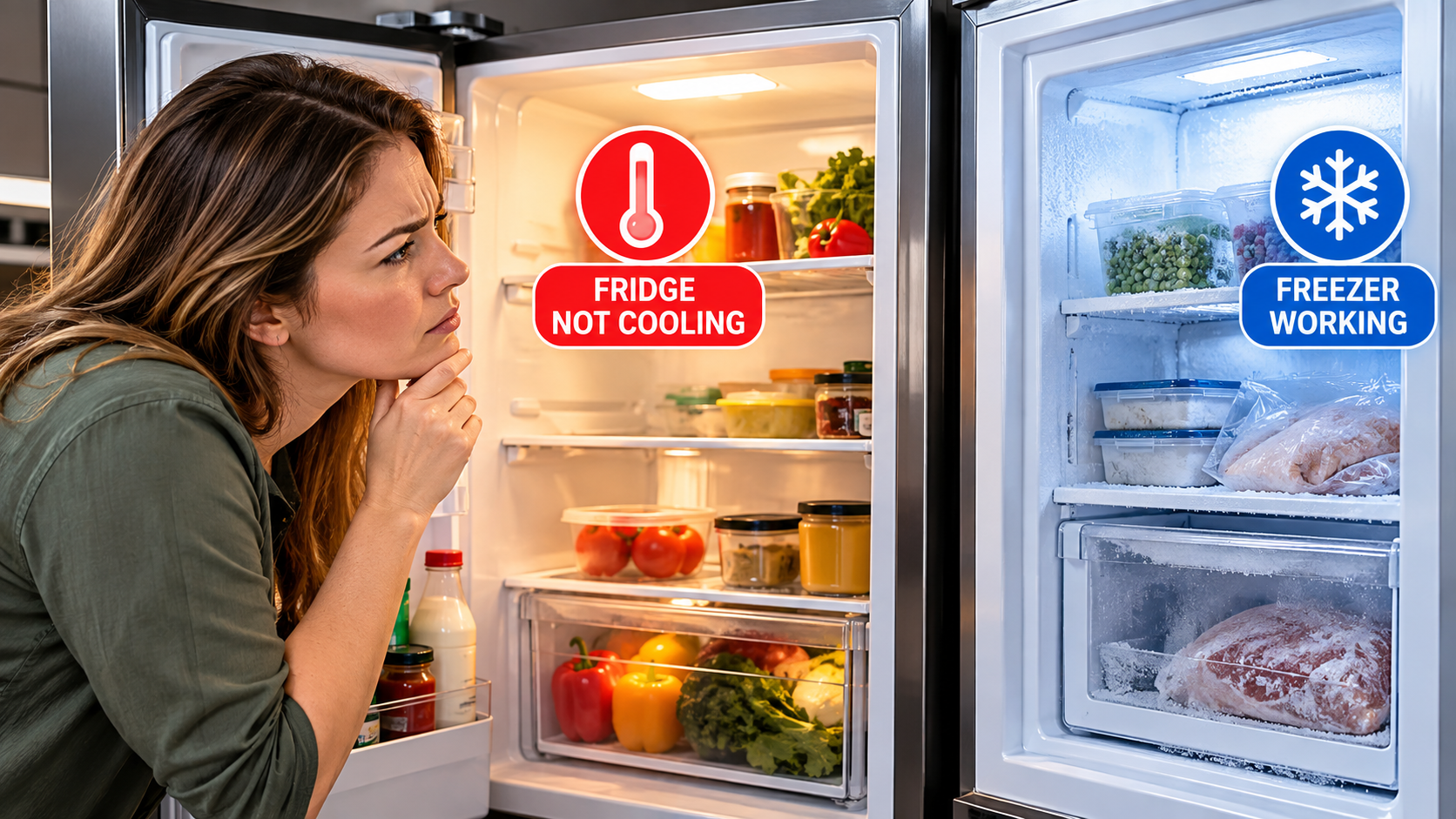
Fridge Not Cooling but Freezer Is Working? Causes & What to Do
If your freezer is still keeping food frozen but the fridge compartment is warm, the appliance is not necessarily beyond repair. In many fridge-freezer designs, cold air is produced around the freezer section and then circulated into the refrigerator compartment. A problem with that airflow, temperature control or defrost system can therefore leave the freezer cold while the fridge becomes too warm.
This guide explains the common reasons this happens, the simple checks you can safely make yourself, and the signs that it is time to arrange a professional fridge repair.
Why Can the Freezer Work While the Fridge Is Warm?
The fridge and freezer compartments may share parts of the same cooling system, but they do not always receive cold air in the same way. If cold air cannot move correctly from the freezer area into the fridge, the freezer can continue to appear normal while temperatures in the fresh-food compartment rise.
Before assuming that the compressor has failed or that the fridge needs replacing, check the symptoms carefully. The cause may be related to airflow, ice build-up, a fan, a control component or another fault that needs diagnosis.
1. Air Vents Are Blocked
Food containers or packaging placed directly against internal vents can restrict the movement of cold air. This is one of the simplest things to check.
- Look for air vents inside the fridge and freezer compartments.
- Move food and containers away from the vents.
- Avoid packing either compartment so tightly that air cannot circulate.
After improving the airflow, allow the appliance time to stabilise before deciding whether the problem has been resolved.
2. There Is Excessive Ice or Frost Build-Up
Heavy frost or ice around the freezer's internal panels can interfere with airflow. In a frost-free appliance, unusual ice build-up can also indicate that part of the automatic defrost system is not operating correctly.
If ice returns soon after being cleared, the underlying cause should be investigated rather than repeatedly defrosting the appliance.
3. The Evaporator Fan Is Not Circulating Air
Many fridge-freezers use a fan to move cold air through the appliance. If that fan stops operating, becomes obstructed by ice or develops a fault, the freezer may remain cold while insufficient cold air reaches the refrigerator compartment.
A change in the normal fan sound can be a useful clue, but electrical and internal component testing is better left to a technician.
4. The Air Damper Is Stuck or Faulty
Some refrigerators use a damper or vent control to regulate how much cold air enters the fridge compartment. If it remains closed or does not respond correctly, the freezer can continue cooling while the fridge warms up.
5. Temperature Sensor or Thermostat Problems
The appliance relies on temperature controls and, depending on the model, electronic sensors to decide when and how to cool. Incorrect temperature information can affect cooling performance even when other parts of the refrigeration system are still operating.
6. Dirty Condenser Coils or Poor Ventilation
Where accessible, condenser coils need to release heat effectively. Dust, restricted ventilation or insufficient space around the appliance can make the refrigeration system work harder. The exact arrangement varies by fridge model, so follow the manufacturer's cleaning and clearance instructions.
7. A More Serious Refrigeration Fault
If airflow and basic settings appear normal but the fridge still cannot maintain temperature, professional diagnosis may be necessary. Refrigerant-system, compressor, control-board and electrical faults cannot be reliably identified from the symptom alone.
What You Can Safely Check Before Calling a Technician
- Confirm that the fridge temperature setting has not accidentally been changed.
- Make sure internal vents are not blocked by food or containers.
- Check whether the door closes properly and the door seal is making contact all the way around.
- Look for unusual frost or ice build-up.
- Check that the appliance has adequate ventilation around it.
- Listen for unusual noises or a fan that sounds different from normal.
Do not dismantle electrical components, open the sealed refrigeration system or attempt refrigerant repairs yourself. If a simple external check does not identify the cause, professional fault-finding is the safer next step.
When Should You Call a Fridge Repair Technician?
Arrange a repair assessment if the fridge remains warm after the basic checks above, if frost quickly returns, if you hear abnormal mechanical noises, or if the appliance repeatedly loses temperature. Acting early is particularly important when food is being stored at unsafe temperatures or a business depends on the refrigeration equipment.
Need help with a fridge that isn't cooling?
E&M Refrigeration provides fridge and refrigeration repair services across Johannesburg and Pretoria.
Call 064-356-9343Fridge Repair Areas
For local service information, visit our fridge repair pages for Johannesburg North, Johannesburg East, Johannesburg South, Johannesburg West, Pretoria North, Pretoria East, Pretoria South and Pretoria West.
Related Fridge Advice
If both compartments are struggling to cool, read our guide on why a refrigerator may not be cooling properly. If the repair estimate is significant, our guide on whether to repair or replace your fridge explains the factors worth considering.
Frequently Asked Questions
Why is my freezer cold but my fridge warm?
A common reason is that cold air is not circulating correctly from the freezer area into the refrigerator compartment. Blocked vents, frost build-up, fan problems, damper faults or temperature-control problems are possible causes.
Does this mean my compressor is broken?
Not necessarily. A working freezer suggests that some cooling is still taking place. The actual cause should be diagnosed from the appliance's complete set of symptoms rather than assuming that the compressor has failed.
Should I switch the fridge off and defrost it?
If there is obvious excessive ice build-up, defrosting according to the manufacturer's instructions may temporarily restore airflow. If the ice returns, however, the underlying fault may still require diagnosis.
Can I keep food in a fridge that is not cooling properly?
Do not assume food is safe simply because it still feels cool. If the fridge cannot maintain a safe storage temperature, move perishable food to reliable refrigeration and follow appropriate food-safety guidance.
The Bottom Line
A freezer that works while the fridge is warm often points to a problem with airflow, frost build-up, a fan, a damper or temperature control rather than automatically meaning the entire appliance has failed. Start with the simple external checks above. If normal cooling does not return, a technician can diagnose the specific fault and advise whether repair is practical.